ONE MORE STOP IN THE SUNSHINE STATE before we roll and that is the town of St. Augustine. Absolutely teeming with history, this town would take several days to soak it all in. With less than a week of discovery, my first plan of attack is to hop a trolley for a tour to get the 30,000 foot level overview, then choose the places I want to discover more in depth.
With a current population of about 14,000, St. Augustine has witnessed just about everything imaginable in history. Inhabitants included the early native population, the Spanish, British and Americans. Following Ponce de Leon’s landing in the early 1500s, the battle over this town included the Spaniards and the British, each who succeeded a couple of times to take the land. It was eventually transferred to the United States after 250 years of colonial status and in 1845 Florida became a state. Located in the northeast corner of Florida on the Atlantic Ocean and with its founding in 1565, this makes St. Augustine the oldest continuously occupied city in the United States.

Constructed from 1672-1695, Castillo de San Marcos, the fort, was the first line of defense when enemy ships sailed into St. Augustine. While I found this fort interesting, it was different from Key West and the Dry Tortuga National Park’s Fort Jefferson in that a town did not exist within the fort’s walls. People came to work at the fort as they would a day job, pulling from the population which lived in St. Augustine.


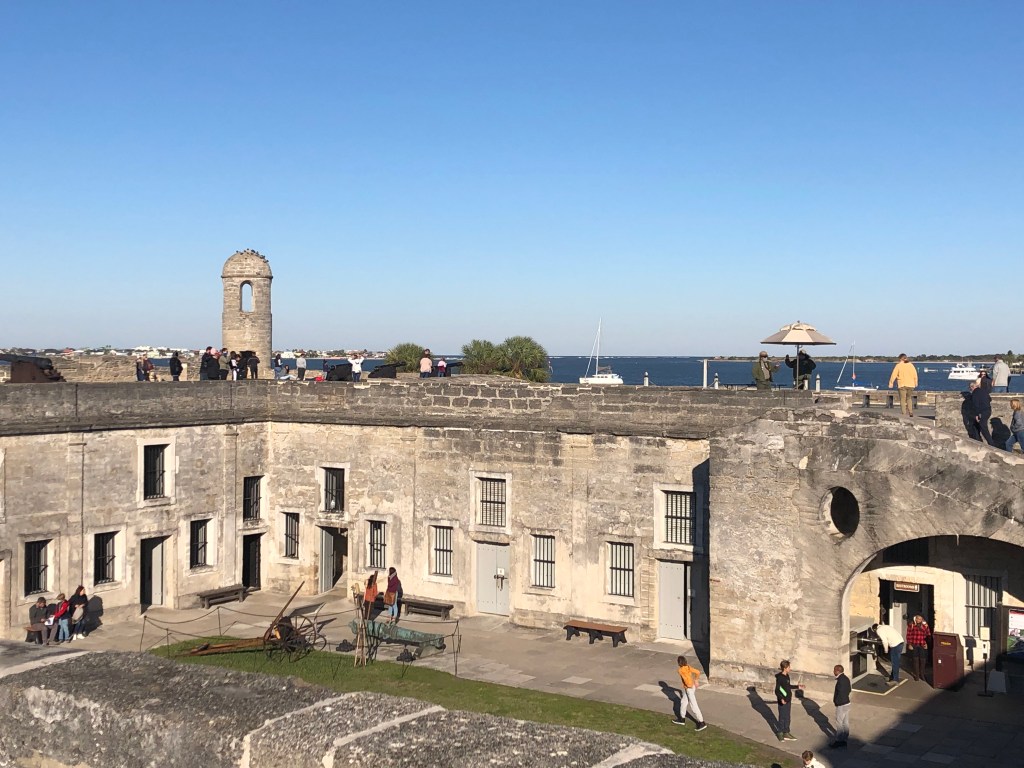
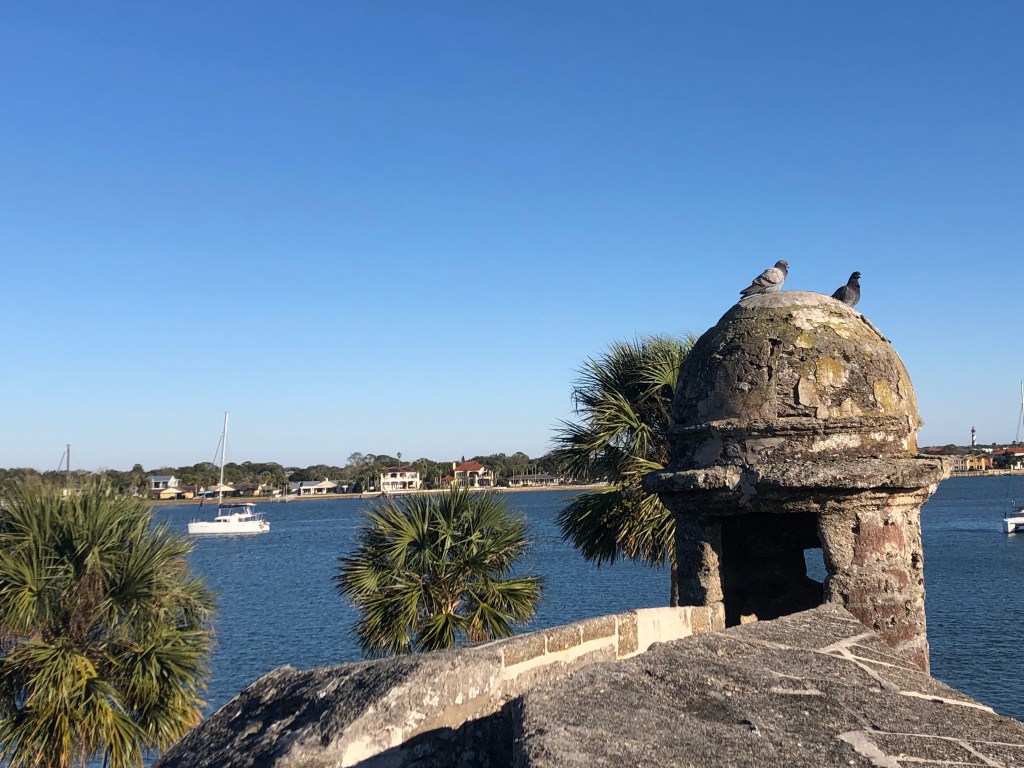
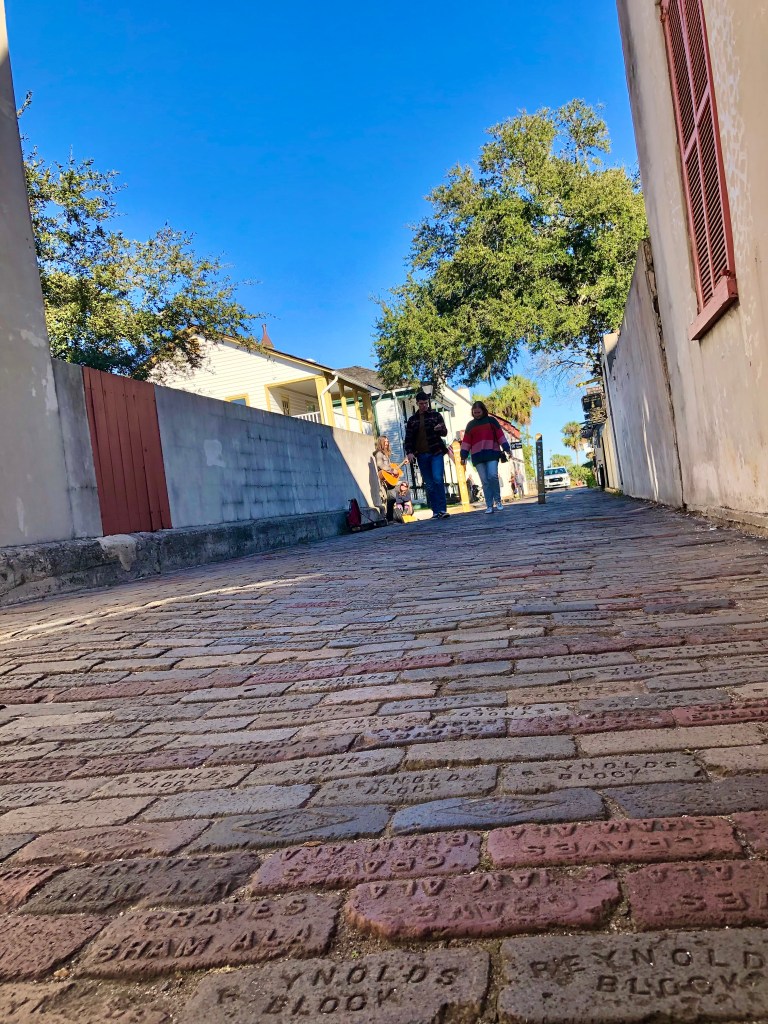
After the trolley tour it was off to the Old City with its narrow alleys and gates established in 1739. This area includes some amazing structures which have stood the test of time. Some are open to tour, but many of them are filled with touristy shops. I did discover a great restaurant, Catch 27, where I had a delicious Mahi sandwich and nice glass of wine before heading back to camp.




 Camp Dawg